A critical journey through the marine world to understand, investigate and take action
When science connects with the ocean, its complexity becomes easier to understand.
A programme that integrates marine environmental education into the classroom through direct contact with a real scientific environment.
Our educational programme is aligned with the official curricula for Secondary Education, Baccalaureate and Vocational Education and Training, as well as with the Educational Project of L’Aquàrium de Barcelona.
Discover our activities:
Educational visits can be conducted in several languages depending on availability, mainly in Catalan or Spanish.
What Secondary Educations students learn during the school visit
Understanding the dynamics and processes of marine ecosystems
During the educational experience at L’Aquàrium de Barcelona, Secondary Education students gain a deeper understanding of marine biodiversity, species adaptations and the processes that regulate the functioning of marine ecosystems.
The methodology combines direct observation with the handling of biological materials, encouraging active, experience-based learning.
Explore our range of activities and book your visit.
Experimental educational activities for Secondary Education
A scientific approach
The experimental workshops for Secondary Education are designed to deepen students’ understanding of the marine environment, encouraging analysis, reflection and an understanding of the natural processes that sustain life in the oceans.
Through observation, experimentation, research and laboratory activities, students develop a critical and scientific perspective on the marine environment.
All experimental educational activities include free access to the different exhibition areas of L’Aquàrium de Barcelona, complete your visit with these interactive spaces and the panoramic terrace with a children’s playground.
The workshops conclude with a discussion in which students share their observations, learning and conclusions.
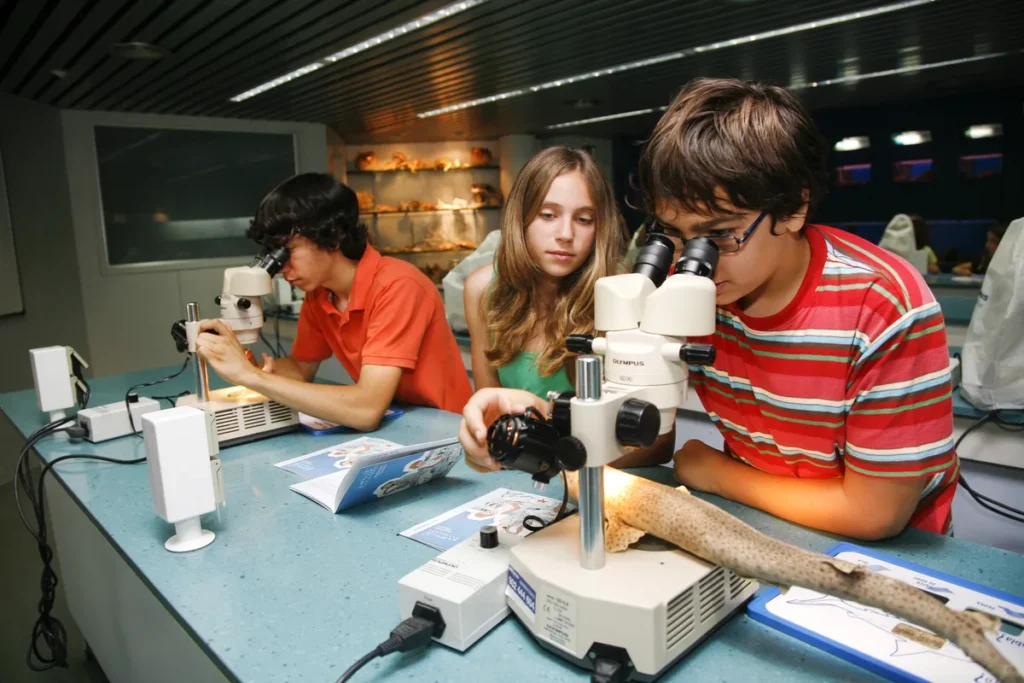
Workshop “SHARKS: PREDATORS OR PREY”
Are sharks really the ocean’s top predators, or are they now among the species most threatened by human activity?
Through the analysis of real data on shark attacks and catches, students will discover the biology and ecology of these cartilaginous fish. They will also observe and examine a variety of biological specimens, such as teeth, scales and other characteristic structures, using a stereomicroscope.
The activity helps students understand the main threats facing shark populations, reflect on the causes of their decline, and appreciate the vital role sharks play in maintaining the balance of marine ecosystems.
Capacity: Maximum 30 students per educator
Duration: 2 hours
Price: 14,50€ per student (workshop + guided visit to the main exhibition + free access to all other areas)
Workshop “THE WORLD OF FISH”
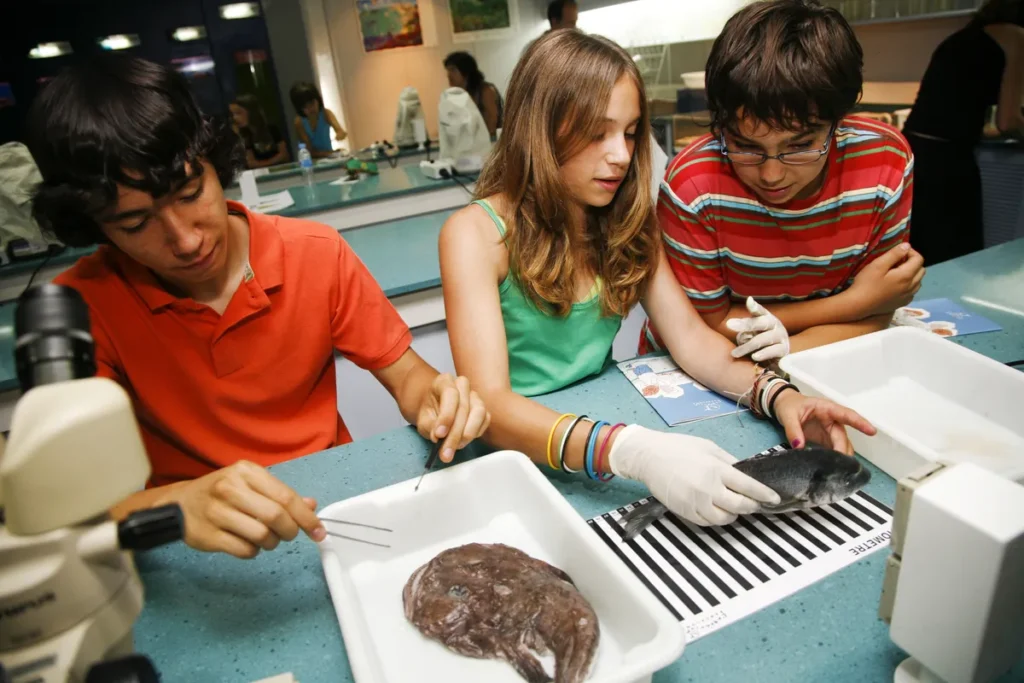
How are fish adapted to life in such diverse environments?
Through the observation and morphological analysis of different specimens, students will identify the main external characteristics of fish and learn to distinguish between benthic species, which live on or near the seabed, and pelagic species, which inhabit open waters.
Using a stereomicroscope to examine scale samples from both bony and cartilaginous fish, students will also discover some of the adaptations that have enabled these vertebrates to colonise a wide variety of aquatic habitats.
Capacity: Maximum 30 students per educator
Duration: 2 hours
Price: 14,50€ per student (workshop + guided visit to the main exhibition + free access to all other areas)
Workshop “MARINE INVERTEBRATES”
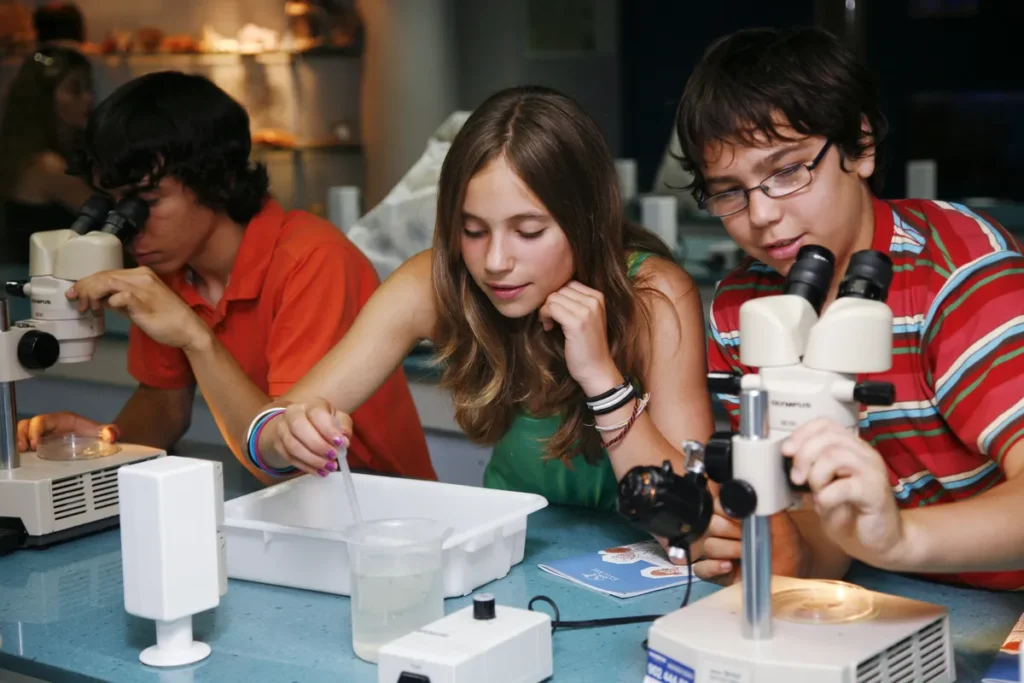
How are marine animals without an internal skeleton classified? What characteristics do they share and what differentiates them?
Through direct observation of living organisms and biological samples, students will identify the characteristic features of the main groups of marine invertebrates and discover the wide diversity of forms and adaptations they present.
In addition, they will use simple classification keys to identify some species, becoming familiar with the tools scientists use to study and catalogue marine biodiversity.
Capacity: Maximum 30 students per educator
Duration: 2 hours
Price: 14,50€ per student (workshop + guided visit to the main exhibition + free access to all other areas)
Workshop “MEDITERRANEAN MARINE ECOSYSTEMS”
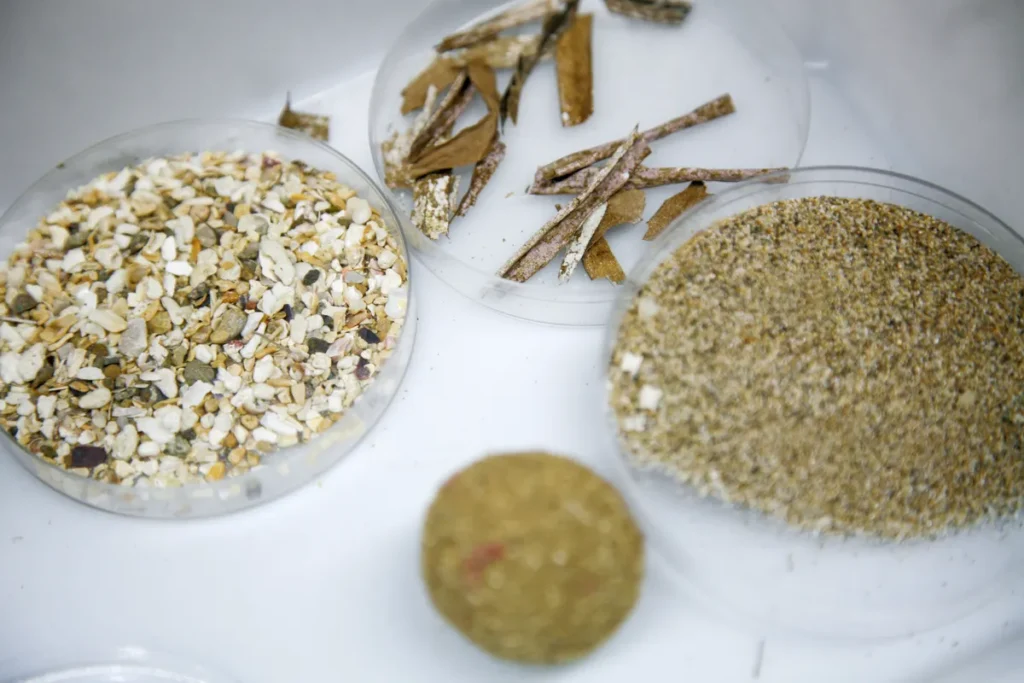
How do marine ecosystems work? What relationships are established between the organisms that inhabit them?
Through stereomicroscope observation of different biological samples, students will analyse various components of Mediterranean marine ecosystems, including sands of different origins, seagrass leaves (Posidonia oceanica) and zooplankton samples.
Based on these observations, they will understand the characteristics of some Mediterranean ecosystems and the trophic relationships between the organisms that make them up, discovering how interactions between species contribute to the balance and functioning of the marine environment.
Capacity: Maximum 30 students per educator
Duration: 2 hours
Price: 14,50€ per student (workshop + guided visit to the main exhibition + free access to all other areas)
Download educational materials to complement your visit:
School visits for Secondary Education in Barcelona
Discovering marine ecosystems through active observation
Integrating observation, analysis and scientific reflection, this educational programme allows students to explore the main areas of L’Aquàrium de Barcelona in a rigorous way:
- The 33 Mediterranean and tropical aquariums
- The Great Oceanarium
- The “Planeta Aqua” exhibition, the new “Mangrove Forest” and “SOS Oceans” areas
- The interactive spaces
- The panoramic terrace
Consult the L’Aquàrium de Barcelona species guide for more information.
GUIDED SCHOOL VISIT
A biologist from L’Aquàrium explains key aspects of marine biology throughout the visit to the Mediterranean and tropical aquariums.
Students will observe similarities and differences between ecosystems, identify key marine vertebrate and invertebrate species, and analyze the relationships between organisms and their environment.
They will also be introduced to marine biodiversity and the importance of its conservation.
Capacity: 30 students per guide
Duration: 1.5 hours
Price: €13.50 per student (Guided tour + Materials + Zone access)
* If you enjoyed our video, please click “like” on YouTube. Thank you.
Exploring marine ecosystems through scientific observation
TECHNICAL AREA SCHOOL VISIT
What is behind the operation of a large aquarium? This visit allows students to discover the technical processes and the human team that make it possible to maintain a complex facility such as L’Aquàrium de Barcelona.
Throughout the tour, they will learn about the physical, chemical and biological processes involved in the water filtration and treatment system, which are essential to ensure animal welfare and the proper functioning of the ecosystems on display.
The visit also includes access to the quarantine room, where the care, monitoring and adaptation protocols for new arrivals to the centre are explained.
In addition, students will discover some of the initiatives developed by L’Aquàrium de Barcelona in conservation, research and scientific outreach to help protect the marine environment.
Capacity: 15 students per time slot
Duration: 1 hour
Price: €14 per student (guided visit to the technical area + free access to all other areas)
Discover the conservation and research projects of L’Aquàrium de Barcelona.
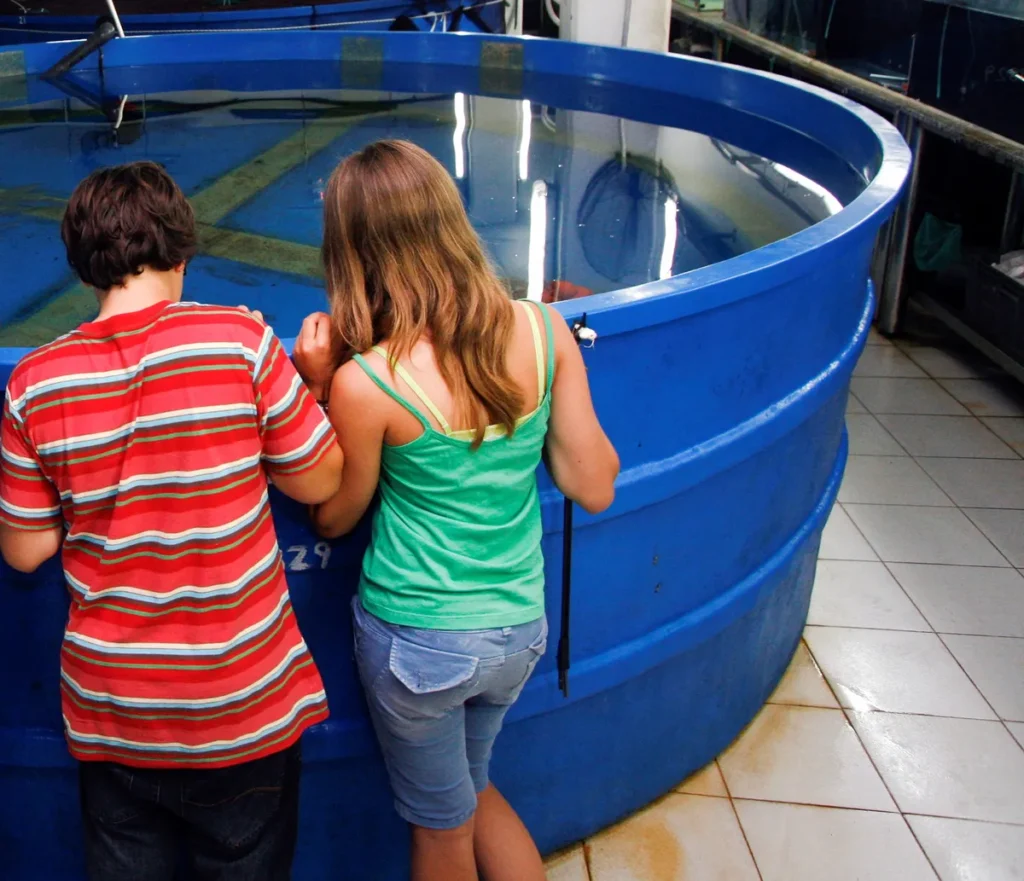
The educational experience that reveals what happens behind the aquariums
SELF-GUIDED SCHOOL VISIT
Scientific exploration of marine ecosystems: 600 species, 11,000 organisms
This type of visit allows students to explore the exhibition areas of L’Aquàrium de Barcelona accompanied by their school educator. It includes access to the main exhibition with the 33 Mediterranean and tropical aquariums and the large Oceanarium, as well as the rest of the spaces and the panoramic terrace with a children’s playground.
Capacity: 100 students per time slot
Duration: 1.5 hours
Price: 11,90€ per student (free access to all areas)
Consult the L’Aquàrium de Barcelona species guide for more information on the marine diversity you will encounter during your visit.
* If you enjoyed our video, please click “like” on YouTube. Thank you.
Autonomous exploration of the marine ecosystem
Download educational materials to complement your visit:
Science, environmental challenges, and the future of the planet: marine research in secondary education
Understanding the ocean today means understanding the planet’s future
Students work as young marine researchers within a real educational project at the Barcelona Marine Center.
The program fosters interpretation skills and debate around major environmental challenges such as climate change, biodiversity loss, and human impact on the ocean.
Key learning outcomes of the secondary school visit
- Activity aligned with the secondary education curriculum
- Scientific analysis of biodiversity and marine ecosystems
- Interpretation of scientific data and evidence
- Study of environmental threats and sustainability
- Application of the scientific method in real-world contexts
- Development of critical thinking and scientific argumentation
- Debate on human impact and marine conservation
- Guidance from a specialized scientific educator
What skills Secondary Education students develop
Applied science to understand today’s environmental challenges
- Autonomy, responsibility, and strategic learning
- Critical citizenship and environmental awareness
- Scientific thinking and data analysis
- Scientific argumentation and communication
Marine environmental education content for secondary students
Applied science to understand and assess current environmental challenges
Activities are designed for students to analyze real data, use classification keys, and understand ecological dynamics through a scientific and critical approach.
The program reinforces curriculum content and encourages scientific vocations.
View program content
Biodiversity and advanced classification
- Sharks, fish, and invertebrates: morphology, reproduction, and diversity
- Use of dichotomous keys for species identification
- Evolutionary adaptations to the marine environment
Ecosystem dynamics
- Current threats to marine ecosystems
- Conservation strategies and sustainable management
Sustainability and conservation
- Current threats to marine ecosystems
- Conservation and sustainable management strategies
Scientific research
- Application of the scientific method
- Data analysis and interpretation
Academic communication
- Oral comprehension
- Scientific argumentation
How to book
- Phone: 93 221 74 74 (Reservations Department)
- Email: reserva@aquariumbcn.com
Complete your visit with these interactive zones at L’Aquàrium
A spectacular circular room featuring diverse habitats with penguins, piranhas, jellyfish, rays, and more, along with interactive zones
An interactive experience where students become ocean protectors and help fight pollution and waste
A new digital space where students explore ecosystems among trees connecting land and sea
Explore activities for other educational levels
- Primary Education activity programme
- Early Childhood Education activity programme
- Baccalaureate research project
- Additional educational resources
Conoce más L’Aquàrium de Barcelona: