Planeta Aqua reveals how marine life has managed to thrive in some of the planet’s most challenging environments.
Throughout the visit, guests will discover themed aquariums, interactive games, and educational spaces designed to explore marine biodiversity in a visual, accessible, and engaging way.
A journey through the most extreme environments of the planet
The other side of the Earth
Though more than 70% of the Earth’s surface is covered by water, we only know a small part of the oceans and the species living there.
Planeta Aqua in Barcelona invites visitors to understand:
- How do animals survive in extreme conditions
- Which biological adaptations have they develop
- Why marine conservation is essential to the balance of our planet
The exhibition showcases the incredible adaptability of marine life. Observing these animals up close inspires visitors to protect the sea. Conservation begins with a glance, an emotion, a visit.
Discover up close how we care for our animals
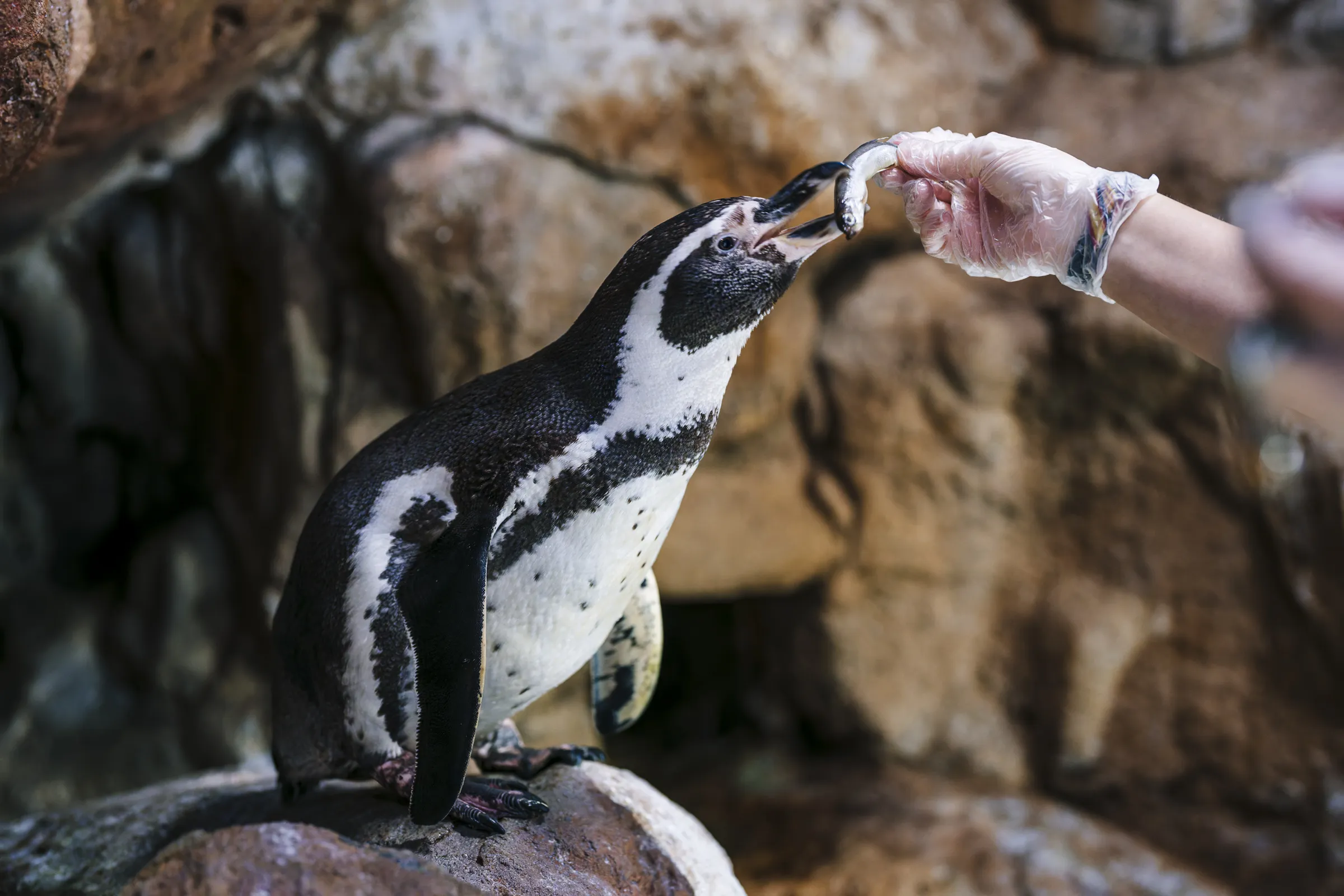
Humboldt Penguins
The penguins at L’Aquàrium de Barcelona belong to the Humboldt penguin species.
The Planeta Aqua area features a recreated climatic habitat containing 120,000 litres of water, specially designed to reproduce the natural conditions of the South American Pacific coast.
The 17-metre panoramic pool allows visitors to observe these birds both on land and swimming underwater, one of the most popular experiences at L’Aquàrium de Barcelona.
Public Penguin Feeding
What do Humboldt penguins eat?
At L’Aquàrium, you can watch the Humboldt penguins being fed live.
Plan your visit so you don’t miss this experience
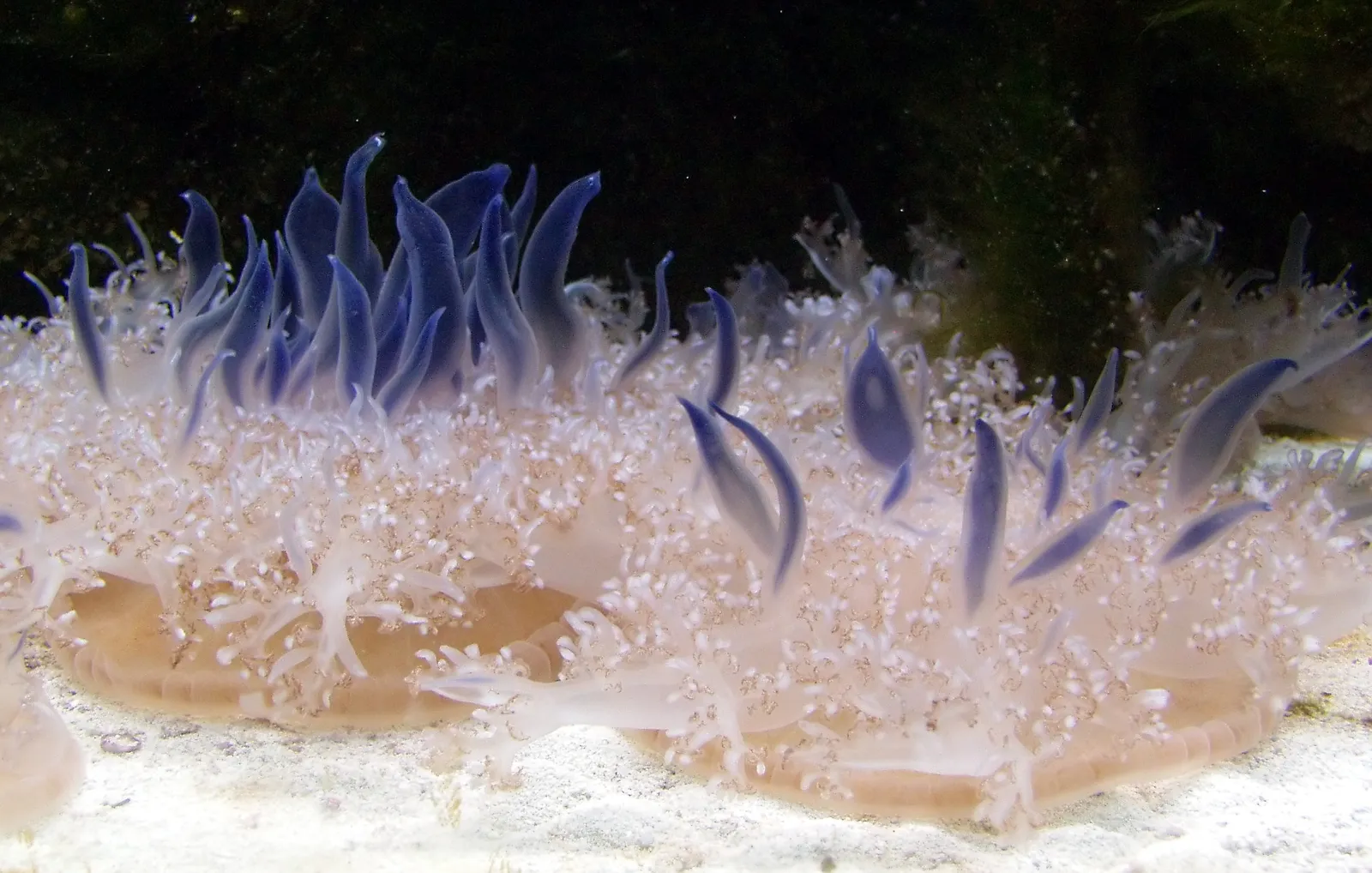
Jellyfish: The Butterflies of the Sea
Inside this life-size reproduction of a sperm whale, visitors can discover the fascinating world of Mediterranean and tropical jellyfish.
Although they are often perceived simply as stinging animals, jellyfish are extraordinary organisms from a biological point of view. Their life cycle includes transformations that resemble the metamorphosis of butterflies.
This exhibition helps visitors understand:
- Their importance in the balance of marine ecosystems
- Their role in food chains
- The diversity of species found in seas and oceans
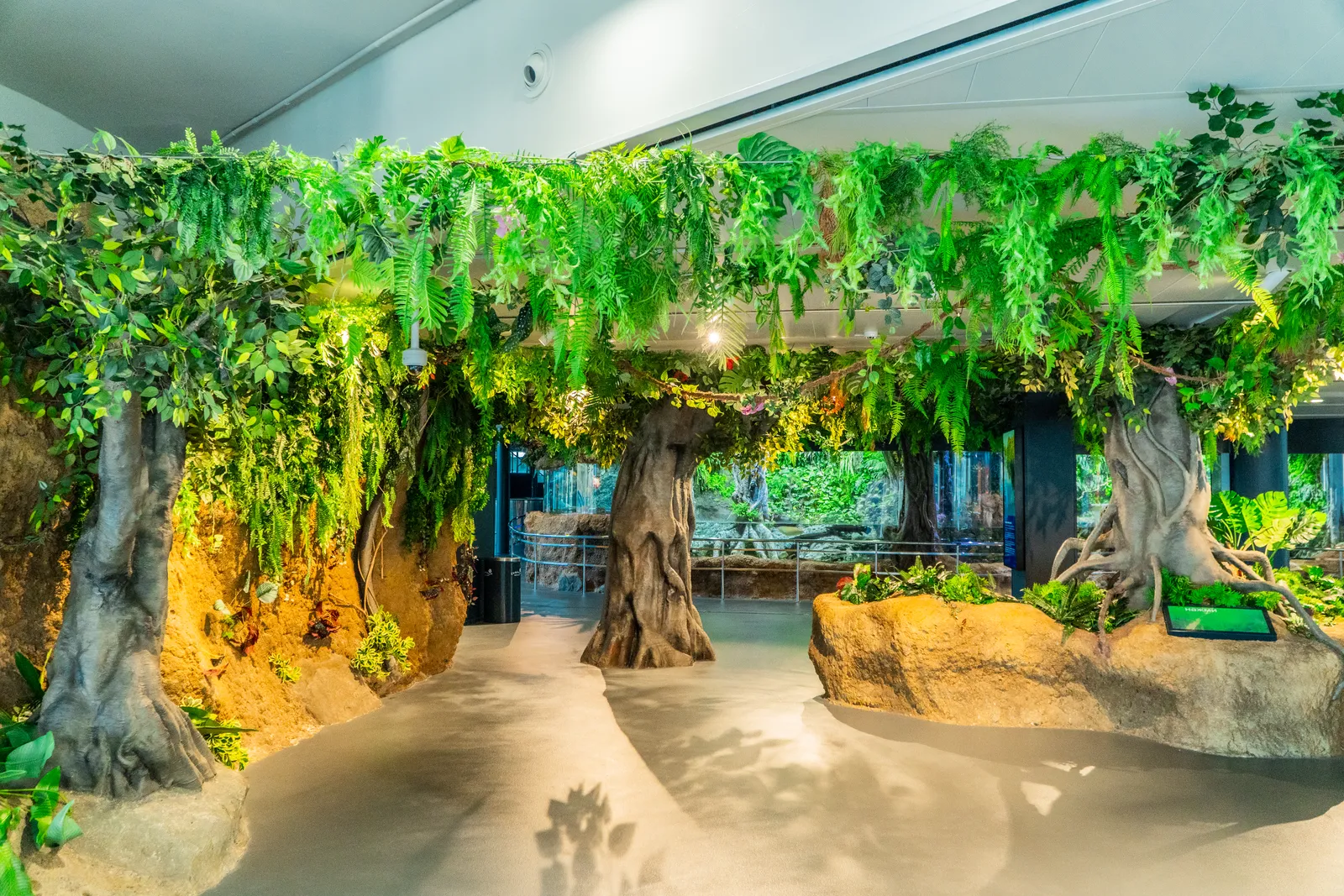
Tropical Ecosystems and Rivers of the World
This area recreates the complete journey of a tropical river, from its source in the mountains to its mouth in the sea.
Visitors can discover its main sections — upper, middle, and lower course — as well as the transition to mangroves, ecosystems that are essential for the reproduction and feeding of many species.
In this area, you’ll discover how rivers connect terrestrial and marine ecosystems
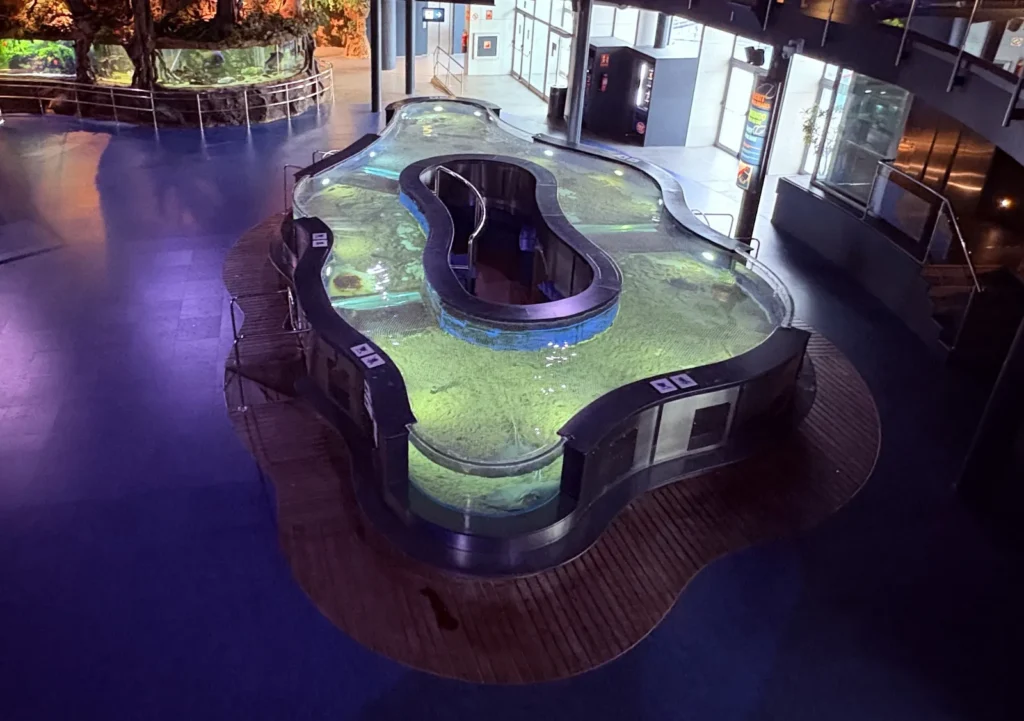
Open Ray tank: A Lagoon Habitat in Barcelona
Rays, close relatives of sharks, are cartilaginous fish. They are characterised by their flattened bodies and large pectoral fins, which allow them to “fly” underwater.
A 20,000-litre tank is one of the spaces where rays display their natural behaviour, making it a must-see stop for families visiting Barcelona and looking for a memorable experience..
Here, the rays glide just a few centimetres from the glass, creating a moment that amazes children and surprises adults alike.
That is why this area is an essential stop for families visiting L’Aquàrium de Barcelona.
Enjoy a close-up experience with rays
Deep-Sea Animals: The Gliders of the Sea
Many of these rays were born at L’Aquàrium de Barcelona, reflecting its commitment to animal welfare, responsible breeding, and marine conservation.
Species present:
- Eagle ray (Myliobatis aquila)
- Stingray (Dasyatis pastinaca)
- American whiptail stingray (Hipanus americanus)
- Guitarfish (Glaucostegus cemiculus)
Learn more about rays
Discover and watch the fascinating feeding of the rays
Plan your visit so you don’t miss this moment
Want to know how rays are cared for at L’Aquàrium ?
Marine Survival Strategies
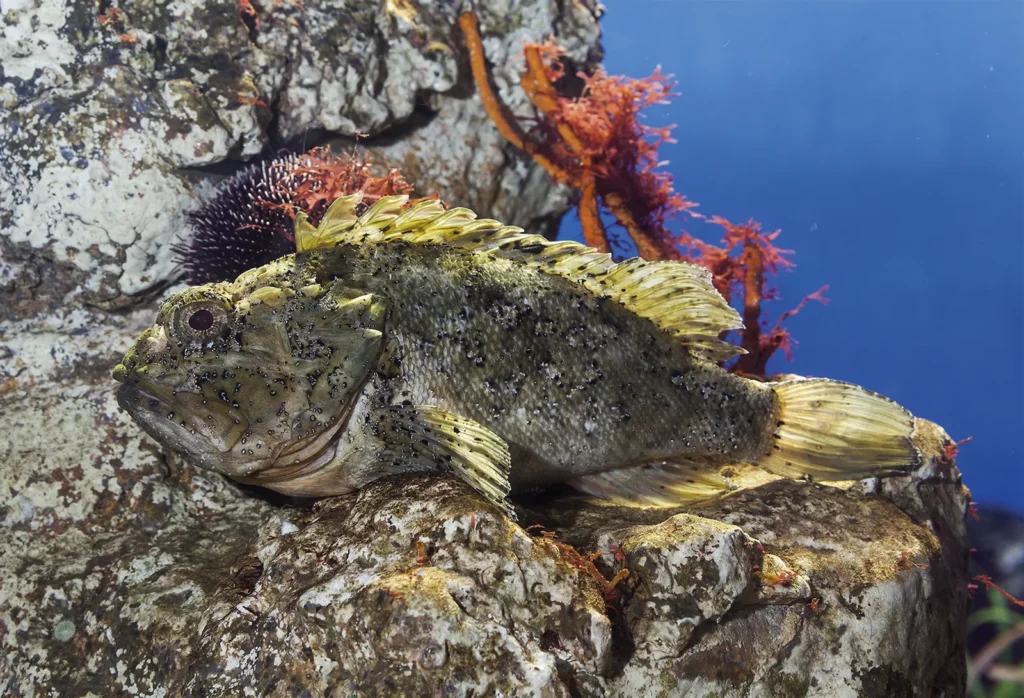
Did you know that some fish can change colour in just a few seconds?
The circular mezzanine on the second floor allows visitors to understand how survival strategies have evolved over millions of years. A series of small aquariums showcases organisms with remarkable adaptations.
Visitors can explore mechanisms such as:
- camouflage, which allows certain animals to blend into their surroundings
- symbiosis, cooperative relationships between species
- physical adaptations, which enable them to survive in complex environaments
What do you know about the marine environment?
Among the aquariums, interactive games and information screens offer content related to ocean conservation, marine vertebrates, and their adaptation to aquatic environments.
This makes it an ideal educational space for a family activity in Barcelona.
Discover how to help save the oceans
Discover how to help save the oceans
Ocean Exploration and Marine Science
The oceans remain one of the least explored territories on the planet.
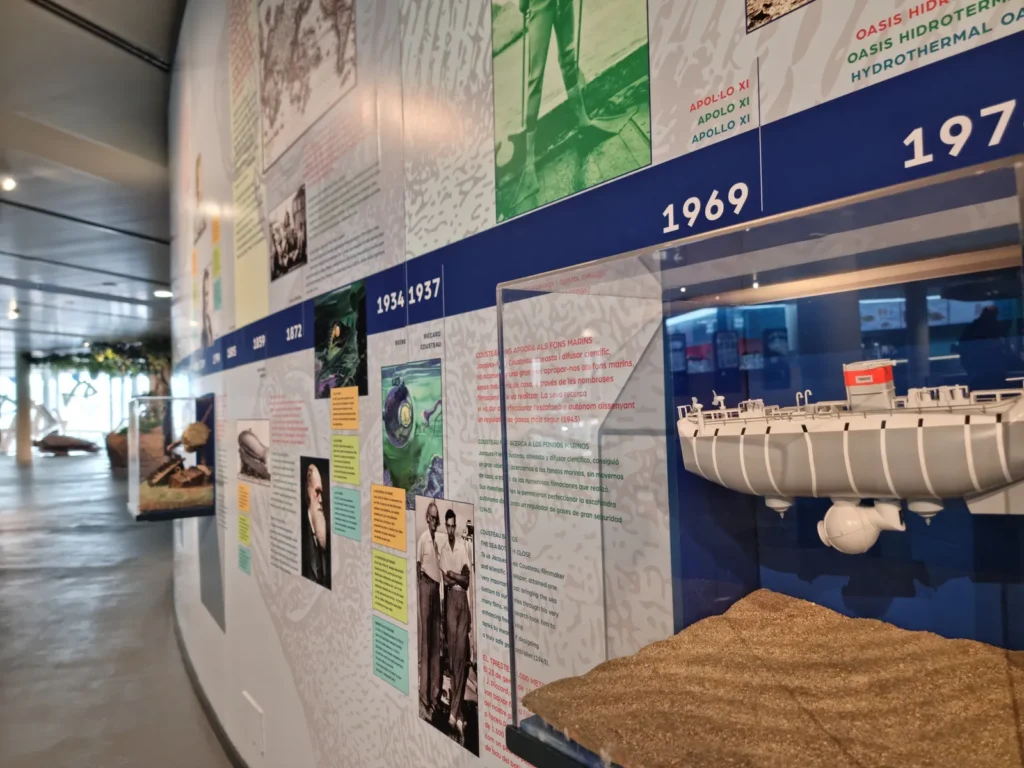
The exhibition “An Exploration in Progress” shows how technology has made it possible to descend into the deepest areas of the ocean.
One of the most remarkable achievements of modern exploration is the 2021 expedition of Spanish explorer Héctor Salvador, who descended to a depth of 10,706 metres in the Sirena Deep, located in the Mariana Trench.
He is currently Director of Operations for EMEA at Triton Submarines, based in Sant Cugat del Vallès. His work is opening new frontiers in deep-sea scientific exploration.
This area invites visitors to discover:
- the history of underwater exploration
- the engineering behind deep-sea submarines
- oceanographic research instruments
Discover the story behind extreme engineering
Interactive submarine
Children can enter the interactive submarine installation and experience how the inside of a scientific submarine works

Discover the mysteries of the oceans
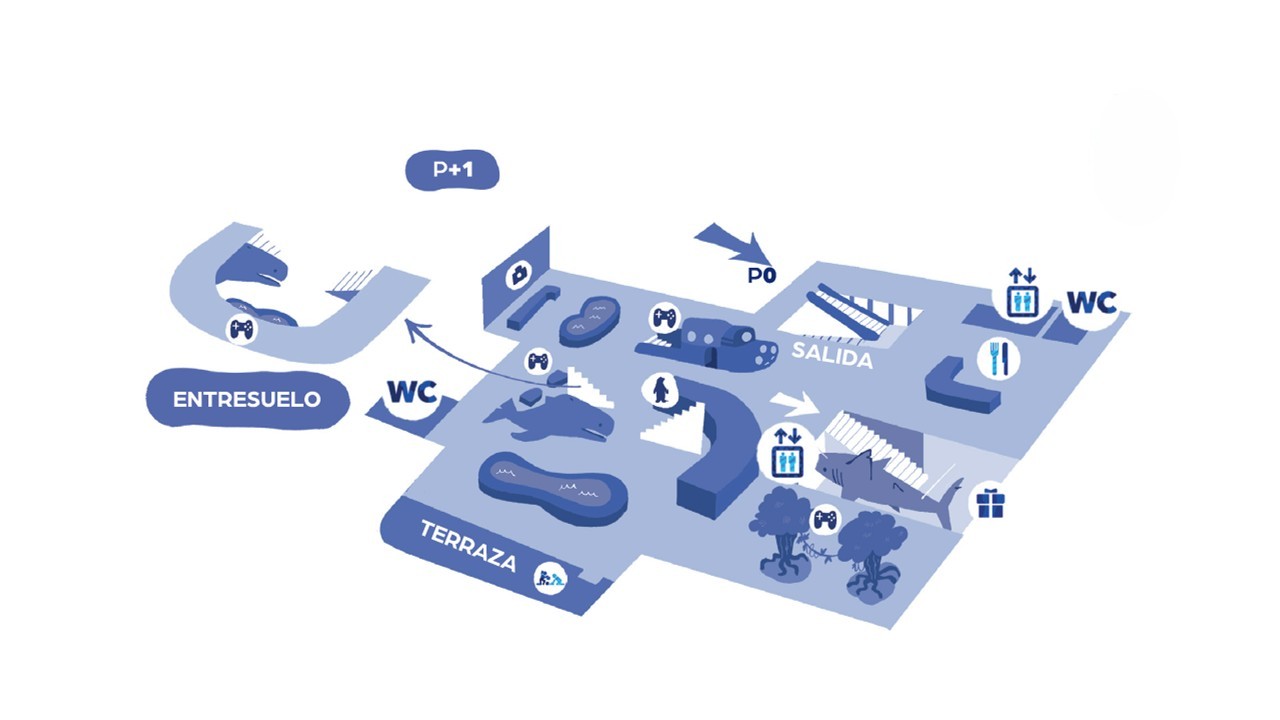
Map of Planeta Aqua in Barcelona
Check the map to find your way around the exhibition hall and discover all the themed areas.
An aquarium is a constantly evolving ecosystem
At L’Aquàrium de Barcelona, animal welfare and scientific research are top priorities. For this reason, during your visit, some of the species indicated may not be visible.
Discover all the creatures at L’Aquàrium
Check the map of the entire facility