A marine adventure that sparks scientific curiosity and a desire to explore the sea
When science is applied to the sea, learning becomes meaningful
Science programme in line with the curricula set out for the early, middle and upper cycles of primary school.
The educational framework is aligned with the marine environmental education strategy developed by the Mediterranean Marine Centre in Barcelona.
Discover how we bring sensory marine learning closer to young children
Educational visits can be conducted in several languages depending on availability, mainly in Catalan or Spanish.
What primary pupils learn during the school visit
Getting started exploring marine ecosystems
Primary pupils discover the marine world through exploration, guided play and direct observation.
The methodology includes handling various biological materials and research in small working groups.
An experience that sparks questions, connects emotions and fosters active, meaningful learning.
Take a look at the following teaching modules and book the date
Experimental educational activities for primary school
Observation and experimentation workshops
Colours, shapes, curiosity and observation, together with experiments and small discoveries, bring to life the scientific activities aimed at primary school pupils at L’Aquàrium de Barcelona, where they can observe, handle, experiment and start to work out how life in the sea works.
All the experimental educational activities include free entry to the interactive zones and the panoramic terrace with the children’s play area.
The workshop ends with a final evaluation in which pupils share the emotions and lessons they experienced.
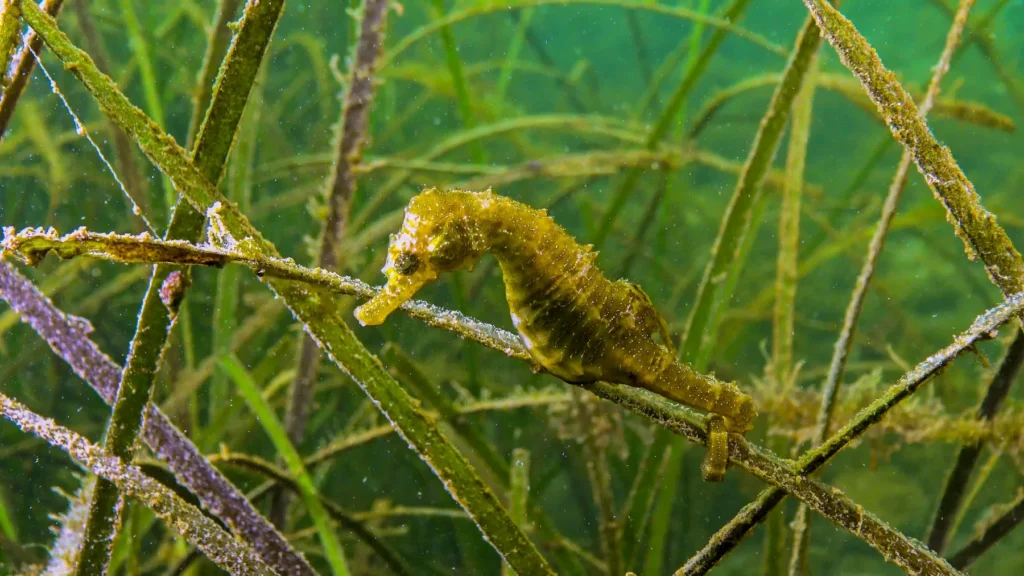
The “SEAHORSE DANCE” workshop
How do seahorses dance? How do they interact with the world around them?
Starting from a story and dance, we’ll discover the biology of seahorses. We invite children to explore movement with their own bodies through a short choreography they will put together based on their experience.
Capacity: max. 25 pupils per group (2 groups per time slot)
Duration: 2 hours
Price: €14.50 per pupil (Workshop + Guided tour + Materials + Entry to the zones)
The “LET’S INVESTIGATE SHARKS” workshop
An accident has happened at sea, on the other side of the Atlantic! Let’s investigate! Will we crack the case?
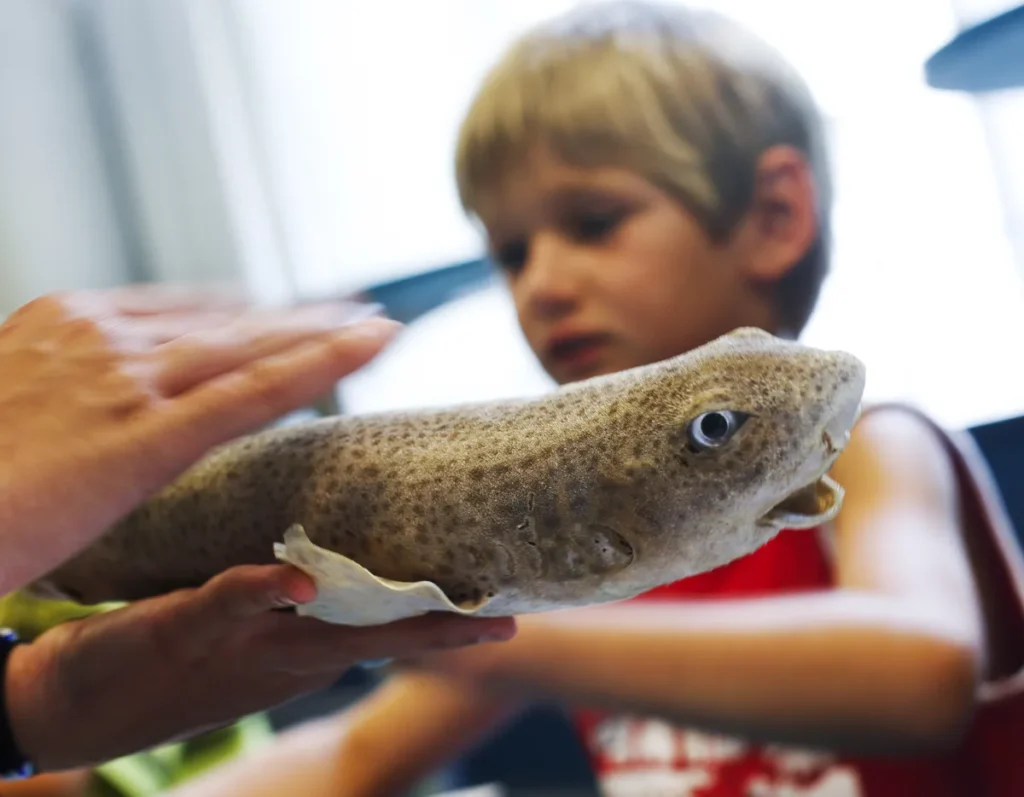
Pupils will become expert marine investigators. Through observing biological samples in small groups, they’ll learn about sharks’ morphology, diet and different types of reproduction. They’ll also discover the diversity of existing species and the main threats they face in the wild.
A proposal that combines investigation, observation, and teamwork.
Capacity: max. 30 pupils per group (2 groups per time slot)
Duration: 2 hours
Price: €14.50 per pupil (Workshop + Guided tour + Materials + Entry to the zones)
If you enjoyed our video, please give it a “thumbs up” below the video on YouTube. Thank you.
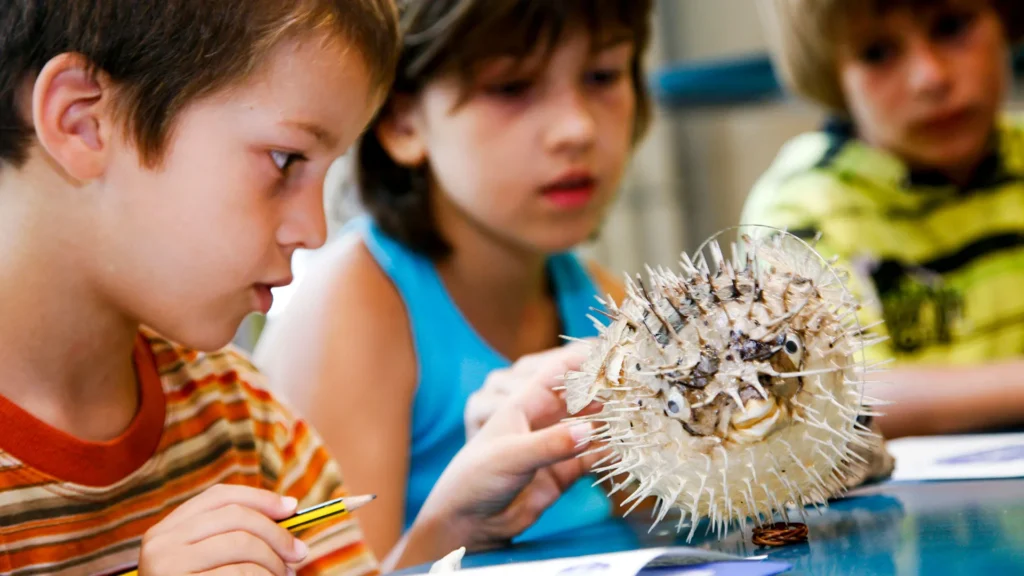
The “LOOK, A FISH!” workshop
What are these marine vertebrates like? How do they eat, live and reproduce? Are they above the minimum size to be caught? How do we know whether fish is fresh or not?
Pupils will become expert scientists investigating a case they’ve been asked to solve.
By observing and handling a fish and various biological materials, pupils will identify the characteristics of this group of marine vertebrates: fins, gills, scales, senses.
They will also relate their shapes to their habitat adaptations.
Learn more fascinating facts about fish found in Species guide
Capacity: max. 30 pupils per group (2 groups per time slot)
Duration: 2 hours
Price: €14.50 per pupil (Workshop + Guided tour + Materials + Entry to the zones)
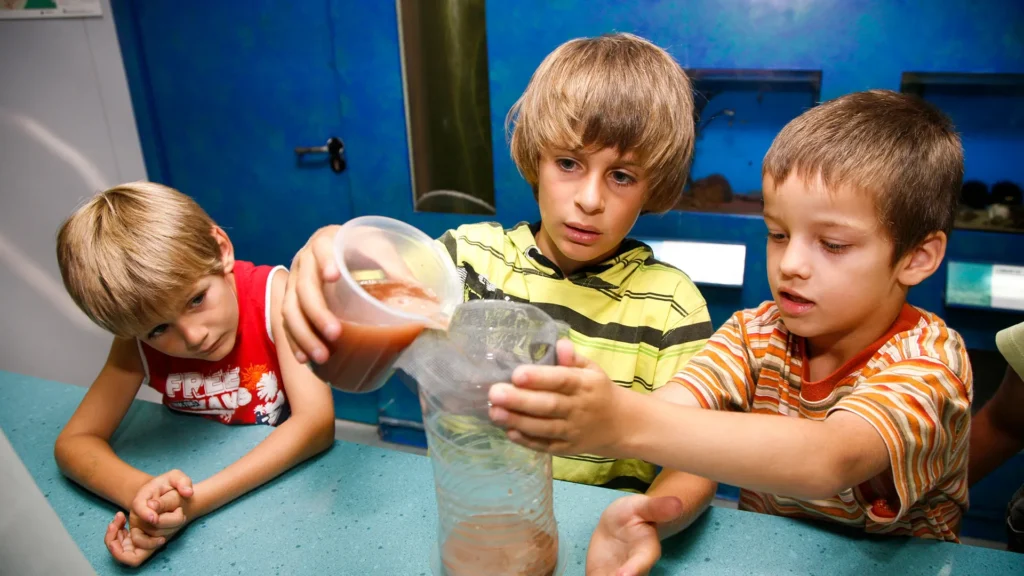
The “LET’S EXPLORE THE BEACH” workshop
Experimenting with and analysing the water, sand and living organisms on the beach to discover the characteristics of this marine ecosystem.
Pupils will become marine biologists and, in working groups, will analyse the beach sand and water and identify some of the adaptations and relationships of the organisms living there. The workshop concludes by uncovering the characteristics of a marine ecosystem.
Capacity: max. 30 pupils per group (2 groups per time slot)
Duration: 2 hours
Price: €14.50 per pupil (Workshop + Guided tour + Materials + Entry to the zones)
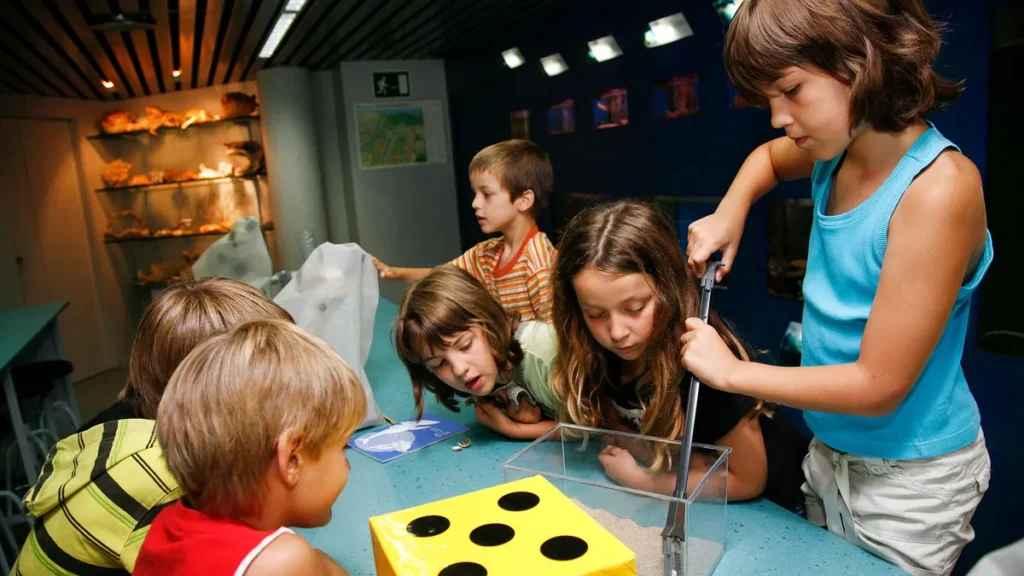
The “SURVIVE! THE BEHAVIOUR GAME” workshop
How do marine organisms preserve their species?
Through a game of questions and observations, pupils will discover survival strategies.
In working groups, they’ll simulate different prey-capture strategies and relate them to diet, observe eggs from different organisms to learn how they reproduce, and identify different defence systems.
Capacity: max. 30 pupils per group (2 groups per time slot)
Duration: 2 hours
Price: €14.50 per pupil (Workshop + Guided tour + Materials + Entry to the zones)
The “I LIVE IN THE SEA AND I’M NOT A FISH” workshop
What does an invertebrate look like, how does it live and how does it adapt in the sea?
By observing living organisms, pupils will identify the characteristics of invertebrate animals and classify them using simple dichotomous keys.
In groups, pupils will become true marine biologists, observing and describing an invertebrate to learn what characterises it and how it adapts to its environment.
Capacity: max. 30 pupils per group(2 groups per time slot)
Duration: 2 hours
Price: €14.50 per pupil (Workshop + Guided tour + Materials + Entry to the zones)
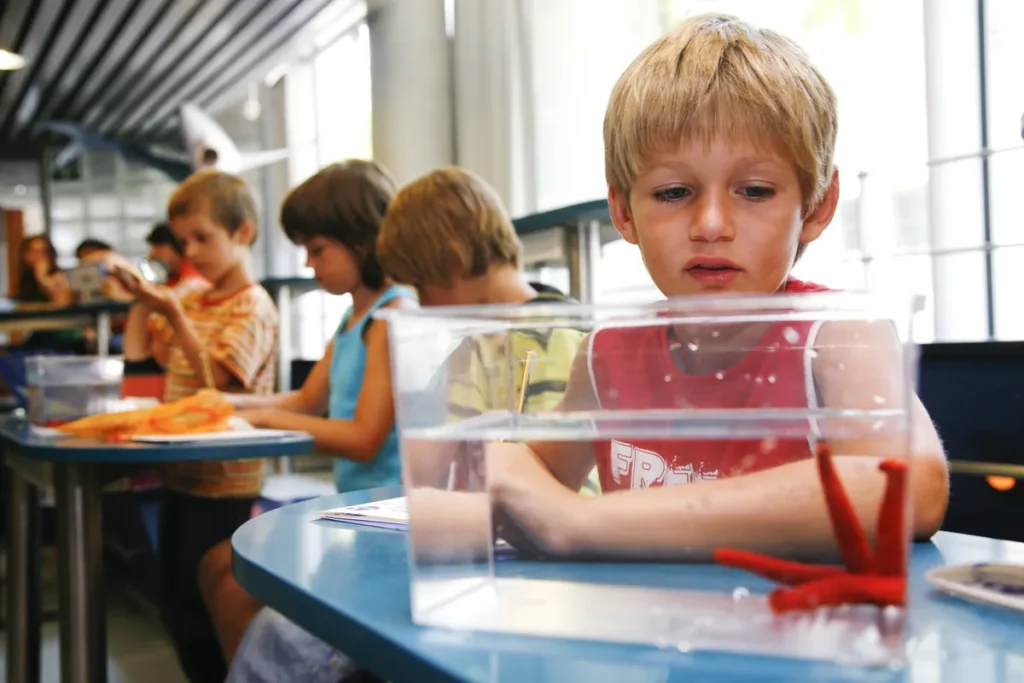
The “DISCOVERING VERTEBRATES” workshop
What do axolotls, penguins and chameleons have in common? And what about dolphins and sharks? Let’s investigate! Get ready to discover the world of vertebrates.
Pupils will become expert scientists investigating a find made on a beach in the Balearic Islands. By observing and handling biological material, pupils will identify the main characteristics and differences between vertebrate groups.
Capacity: max. 30 pupils per group (2 groups per time slot)
Duration: 2 hours
Price: €14.50 per pupil (Workshop + Guided tour + Materials + Entry to the zones)
Access resources to complement your classroom work:
TIC – INTERACTIVE SCIENCE THEATRE
Introduction to marine biodiversity. Cultural awareness and expression
Discovering and imagining alongside characters and marine stories, children will learn what life is like at the bottom of the sea in a fun and easy-to-understand way.
Theatre “JOURNEY TO THE LAND OF MARMARÁ”
Mariel has lost her imaginary fish, Marmará. Do you want to accompany her across every sea in the world? Will you find him?
The journey invites you to set off with Mariel on a magical adventure through colourful seas, where together they’ll search for her imaginary fish.
Along the way they’ll discover surprising creatures, learn how they live and adapt to their environment, and awaken curiosity and affection for nature.
Capacity: min. 30 – max. 50 pupils per time slot
Duration: 2 hours
Price: €14.50 per pupil (Theatre + Guided tour + Materials + Entry to the zones)
* Black-light theatre. The play is performed in Catalan
* If you enjoyed our video, please give it a “thumbs up” below the video on YouTube. Thank you.
An experience full of fantasy, discoveries and emotion
Theatre “The magic of colours!
Evaristo has got lost in the Mediterranean Sea. How will this clownfish make it back to his tropical sea? Will he find his anemone?
With the help of your pupils and the fish we’ll meet along the way, we’re sure to help Evaristo and answer these and other questions.
Through the activity, pupils will identify the characteristics of certain marine animals as they adapt to their environment.
Capacity: min. 30 – max. 50 pupils per time slot
Duration: 2 hours
Price: €14.50 per pupil (Theatre + Guided tour + Materials + Entry to the zones)
Theatre “The mysterious case of the missing shark”
L’Aquàrium’s biggest shark has gone missing. Doctor Pandora, helped by her friends from the deep, will try to find it. Will they succeed?
During the activity, children will discover the characteristics and adaptations of animals living in the depths of the sea, following the clues that Doctor Pandora finds along the way to solve the mystery of the missing shark.
Capacity: min. 30 – max. 50 pupils per time slot
Duration: 2 hours
Price: €14.50 per pupil (Theatre + Guided tour + Materials + Entry to the zones)
* If you enjoyed our video, please give it a “thumbs up” below the video on YouTube. Thank you.
Educational materials to complement the visit:
School visits for primary education in Barcelona
Every visit is a chance to build the first scientific awareness of the sea
Designed to stimulate observation, emotion and curiosity, the educational experience introduces young children to discovering the sea:
- The 21 Mediterranean and tropical aquariums
- The Great Oceanarium
- “Planeta Aqua”
- The interactive zones
- The children’s terrace
Don’t forget that L’Aquàrium de Barcelona has a species guide.
GUIDED SCHOOL VISIT
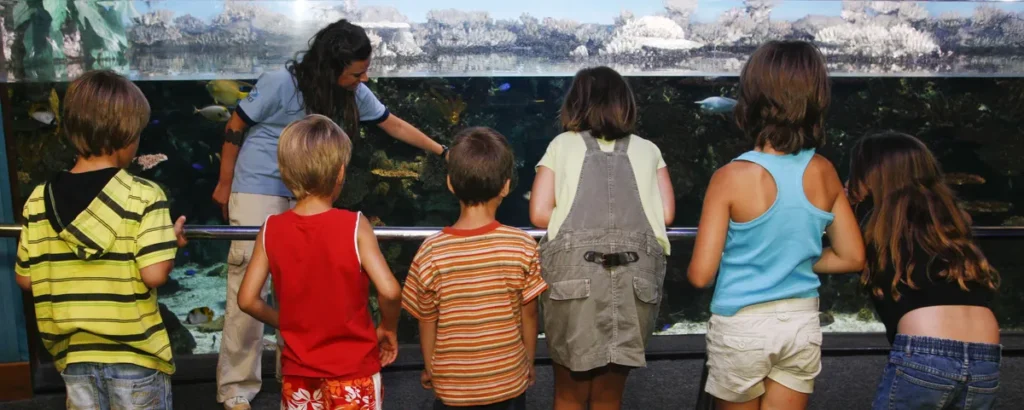
A walk to observe and learn about life at the bottom of the sea, led by an L’Aquàrium educator.
Discover Mediterranean and tropical aquariums and the Great Oceanarium, the living creatures that inhabit them, and how they relate to each other and to their environment. Questions, explanations and fascinating facts to get closer to the aquatic world, at once so near and so far.
Capacity: 30 pupils per guide
Duration: 1.5 hours
Price: €13.50 per pupil (Guided tour + Materials + Entry to the zones)
* If you enjoyed our video, please give it a “thumbs up” below the video on YouTube. Thank you.
Scientific learning through guided observation
SELF GUIDED SCHOOL VISIT
Scientific exploration of the Mediterranean marine ecosystem: 600 species, 11,000 organisms
This option allows a visit to L’Aquàrium’s exhibition areas, with the educator leading the group. Includes a visit to the Mediterranean and tropical aquariums, the Great Oceanarium, the remaining spaces, and the children’s terrace.
Capacity: 100 pupils per time slot
Duration: 1.5 hours
Price: €11.90 per pupil (Free visit + Materials + Entry to the zones)
Don’t forget that L’Aquàrium de Barcelona has a species guide.
* If you enjoyed our video, please give it a “thumbs up” below the video on YouTube. Thank you.
Scientific learning through guided observation
Complete your visit with these interactive zones at L’Aquàrium:
“A NIGHT WITH SHARKS” experience for primary schools in Barcelona
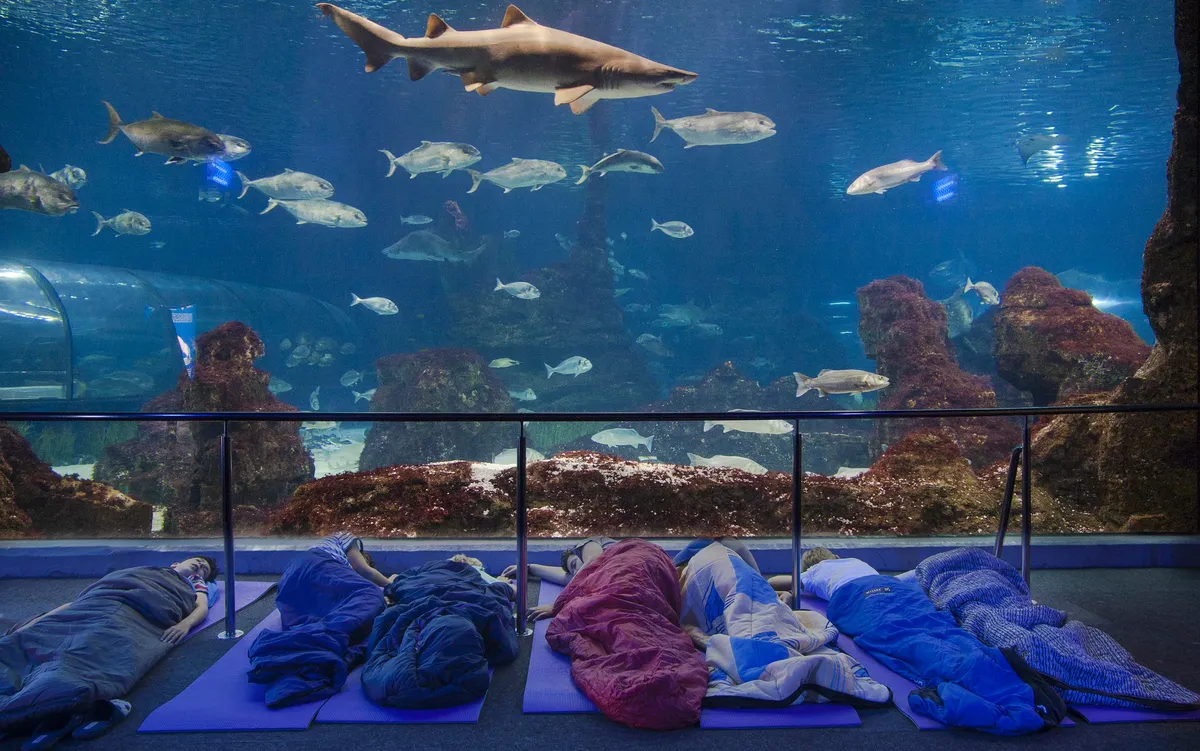
Sleeping surrounded by sharks and thousands of fish
An activity designed for primary pupils combining adventure, marine science and discovery in the city’s largest aquarium.
For the whole class, an unforgettable night sleeping in the Oceanarium with sharks and thousands of fish.
Find out more about a unique educational experience
An activity designed for primary pupils combining adventure, marine science and discovery in the city’s largest aquarium. For the whole class, an unforgettable night sleeping in the Oceanarium with sharks and thousands of fish.
A unique opportunity for the whole class to spend the night together sleeping with the sharks and take part in workshops, night games and discoveries that will turn pupils into true shark experts. In the morning, they’ll also see and learn about the daily work divers do to look after the sharks. Sleeping with sharks: no pupil will ever forget it!
Capacity: max. 25 pupils per time slot
Duration: from 7.30 pm to 10 am the following morning
Price: €75 per pupil (Experience + Dinner + Breakfast + 2 supervisors)
- public liability insurance
* This activity requires specific authorisations and materials. Please request information about this.
Download teaching materials:
Observation, research and the scientific method in the marine environment
Active learning to understand marine biodiversity and how ecosystems work
The school visit becomes a guided research experience where pupils observe, ask questions and test hypotheses in direct contact with the marine ecosystem.
The proposal ties in with classroom work before and after the activity, reinforcing the natural science curriculum.
A first scientific encounter with the sea can spark future scientific vocations.
Pedagogical highlights of the primary school visit
- Activity aligned with the primary education curriculum
- Direct observation of marine species and ecosystems
- Application of the scientific method in real situations
- Analysis of food-web relationships and ecological balance
- Developing critical thinking and reasoned argument
- Fostering attitudes of respect and environmental conservation
- Accompanied by a specialised educator
What skills do primary pupils develop
Skills practised in authentic marine contexts
- Learning to learn and personal autonomy
- Civic commitment and sustainability
- Scientific and mathematical thinking
- Oral communication and reasoned argument
- Cultural awareness and creative expression
Marine environmental education content in primary school
Applied science to understand biodiversity and its threats
Activities designed so pupils observe, form hypotheses and understand the relationships within the marine ecosystem through the scientific method.
View programme contents
Marine biodiversity
- Species groups: sharks, fish, invertebrates and vertebrates
- Morphology, diet, reproduction
- Threats to biodiversity
- Importance of marine conservation
Ecosystem and relationships
- Components of the marine ecosystem
- Analysis of sand, water and organisms
- Food-web relationships and ecological balance
- Adaptations to the marine environment
Scientific method
- Observation and formulating hypotheses
- Experimentation and analysis of results
Communication skills
- Listening comprehension
- Debate and respecting turn-taking
- Storytelling and physical expression
How to book
- Teléfono: 93 221 74 74 (Departamento de Reservas)
- Correo electrónico: reserva@aquariumbcn.com
Complete your visit with interactive areas
A spectacular circular room with distinct habitats housing penguins, piranhas, jellyfish, rays, and more, along with interactive areas
An interactive experience where students become ocean protectors, helping keep it free from waste and pollution to protect marine species
A new digital space where students discover different ecosystems, located among trees that connect land and sea
Explore activities for other school levels
Conoce más de L’Aquàrium de Barcelona: